The shift into Florida’s fall and early winter often brings heavy, sporadic downpours. These intense bursts of rain, combined with exposed soil on construction sites, create a perfect storm for erosion, a major threat that can lead to costly fines, project delays, and damaged reputations. In this expert guide, we focus on the essential Florida aggregates and material recommendations to control stormwater runoff, protect your site, and maintain compliance with Florida’s stringent regulations.
The Florida Fall Water Challenge: Why Erosion Risk Spikes Now
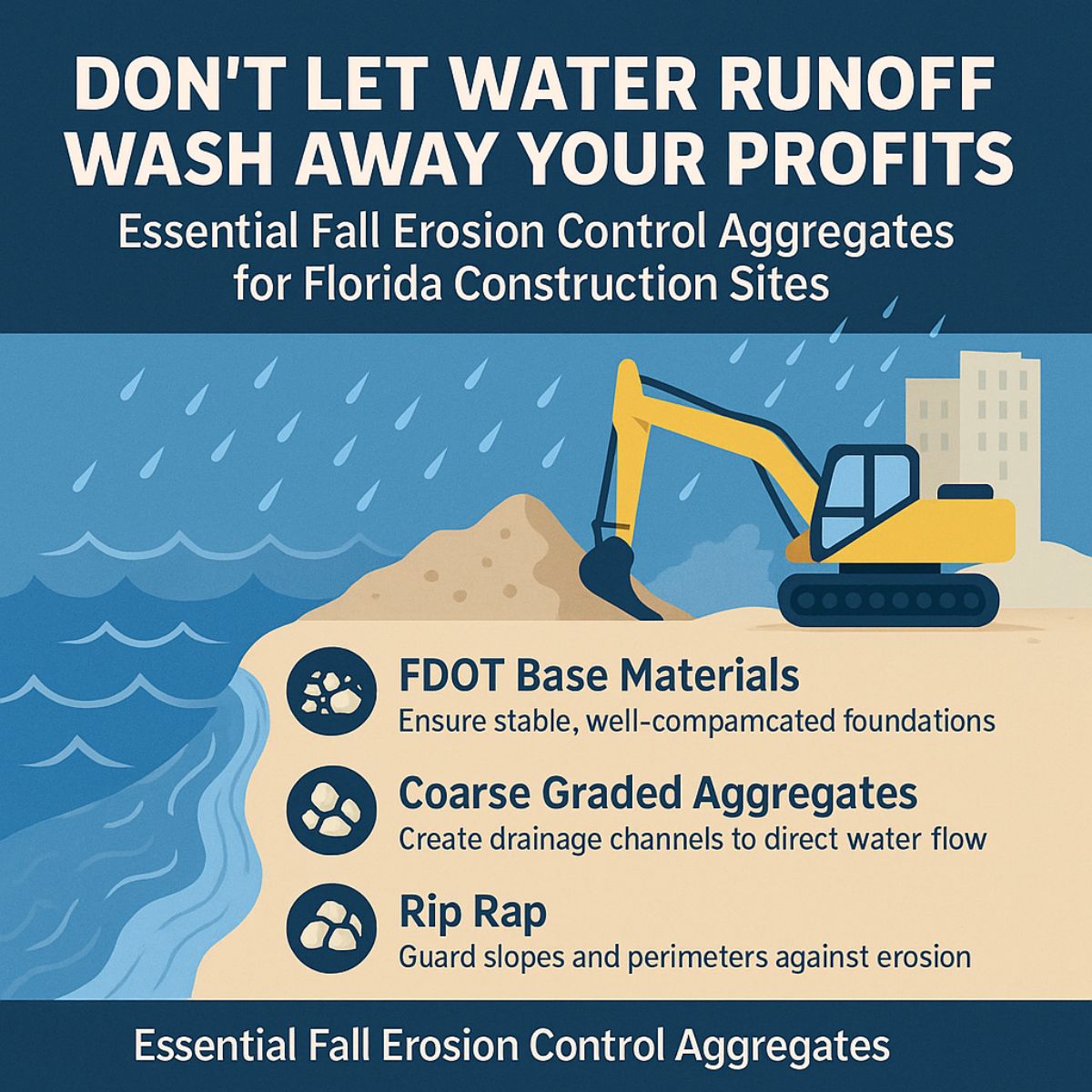
As construction professionals, you understand the constant erosion control challenge in Florida. The period following the peak summer heat is deceptively dangerous.
Seasonal rainfall, even if less frequent, tends to be intense and short-lived. When this water hits unprotected, cleared land, the high velocity strips away valuable topsoil, depositing sediment into drainage systems and nearby waterways. Furthermore, cooler temperatures slow down natural stabilization, as the growth of protective vegetation is less active. Managing construction site runoff effectively during this time requires robust mechanical controls built with high-quality, durable Florida aggregates.
Your Fall Erosion Control BMP Aggregates Checklist
Compliance with state guidelines, referenced in Florida DEP and local municipality manuals, is mandatory. The success of key Best Management Practices (BMPs) often depends on selecting the correct type and size of aggregate for its specific function.
1. Entrance Stabilization: Prevent Tracking with Durable Stone
Vehicle tires are the number one culprit for tracking sediment onto public roads and into storm drains. The solution is a Temporary Gravel Entrance, which requires a specific type of stone to be effective.
- The Right Aggregate: The entrance must be constructed with a durable, large-crushed Florida aggregates product, often Crushed Stone or Limestone, typically 1.5 to 3 inches in diameter. This stone must withstand heavy truck traffic without quickly breaking down or washing away.
- Expert Insight: Use a well-graded aggregate that can interlock. What to Avoid: Using fine gravel or sand, which becomes mud and gets tracked out immediately, defeating the purpose.
- Maintenance Tip: Ensure the gravel is consistently maintained. If it becomes heavily saturated with mud, it needs immediate cleaning or replenishment to remain effective.
2. Inlet Protection: Guarding Drains with Filter Aggregates
Storm drain inlets are the direct gateway to the storm sewer system. Protecting them is non-negotiable for compliance.
- Block and Gravel Inlet Protection: This method uses a barrier, often concrete blocks, surrounded by a specific Filter Aggregate (e.g., washed crushed stone or river rock). The aggregate acts as a final filter, catching finer particles that might pass through other perimeter controls.
- The Right Aggregate: Use clean, washed filter aggregates that are free of fines. A typical size range of 0.5 to 1.5 inches allows water to pass through while trapping silt.
- Do This: Inspect these barriers frequently, especially after heavy rainfall. Clogged aggregate should be cleared or replaced to restore its filtering capacity.
3. Perimeter Control: The Role of Stone in Sediment Barriers
While silt fences form the basic barrier, rip rap for erosion control and aggregate barriers are vital backup defenses, particularly where runoff flow is concentrated.
- Sediment Traps and Berms: Larger Florida aggregates are often used to construct check dams or sediment basins where flow velocity needs to be reduced rapidly, forcing sediment to settle out of the water.
Eco-Friendly Rip Rap for Drainage & Ditches: Controlling High-Flow Areas
For high-velocity channels, slopes, or high-flow ditch lines, temporary barriers like silt fences are insufficient. These areas require robust, permanent stabilization, which is where rip rap for erosion control excels.
Smaller, well-graded natural stone, often referred to as Toe Rock, Ditch Lining Rock, or high-quality Drainage Rock, is the superior solution for ditch lining.
Why Stone is the Superior Ditch Lining Material:
- Longevity: Stone lining is a permanent solution. It will not degrade, tear, or require re-stitching like synthetic mats, offering a lower long-term maintenance cost.
- Energy Dissipation: The irregular, interlocking nature of natural Florida aggregates effectively slows down the water’s velocity and prevents the water from gaining the erosive power needed to cut away at the channel bed and banks.
- Reduced Washout Risk: Unlike exposed soil or temporary matting, a rip-rap-lined ditch remains stable under intense flow, ensuring the ditch maintains its capacity and structural integrity.
Expert Insight: When selecting stone for ditch lining, consult your supplier to ensure the material is dense, durable, and sized appropriately for the ditch’s calculated flow velocity (often specified in engineering plans).
Partnering with Delta Aggregate for Aggregates Compliance
Protecting your job site from erosion control BMPs, Florida violations, and costly delays starts with quality materials. By adhering to these BMPs and deploying the appropriate Florida aggregates (like quality crushed stone, filter stone, and rip rap), you safeguard your investment and maintain regulatory compliance.
Ready to secure your job site this fall with high-quality, certified aggregates?
Contact our team today to discuss your project’s specific aggregate needs. For more technical insights on utilizing Florida aggregates and rip rap in your next project, be sure to visit the Delta Aggregate blog.