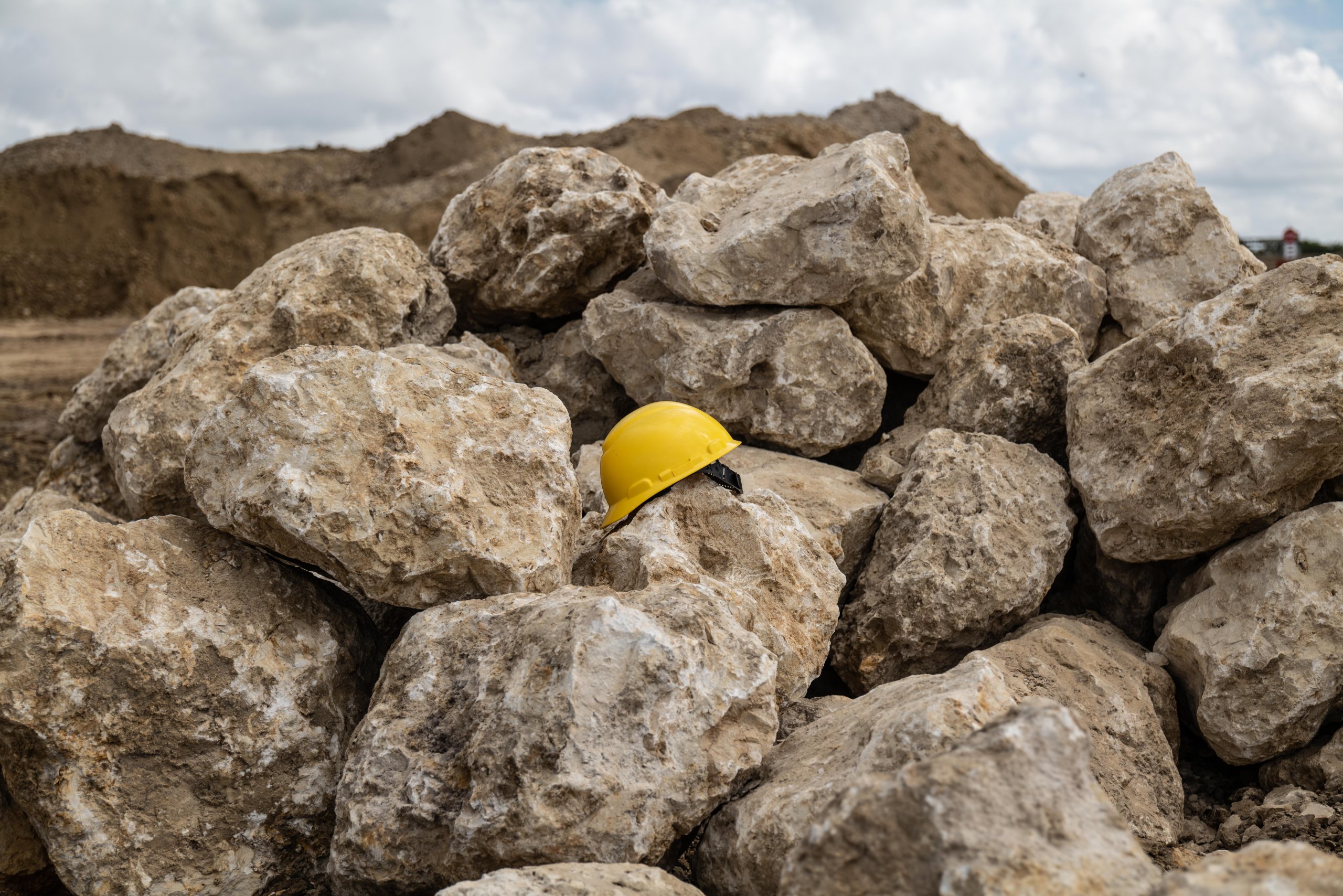
When most people hear the word “boulder,” they think landscaping. In the heavy civil and coastal construction world along Florida’s Gulf Coast, boulders are structural materials, specified by weight class, placed with excavators, and sized to absorb the kind of wave energy and storm surge that smaller stone simply cannot handle. Understanding how Gulf Coast boulders are classified, where each size class performs best, and what happens when the wrong material goes in the wrong location is essential knowledge for anyone managing a coastal or inland erosion control project in Southwest Florida or along the Georgia coast.
With hurricane season beginning June 1, the spring window is the right time to assess existing installations, identify vulnerabilities, and get the right material staged before demand and lead times tighten.
How Boulder Size Class Drives Every Other Decision on a Coastal Project
Defining Gulf Coast Boulders by Weight Class and Application
Gulf Coast boulders used in erosion control and shoreline protection applications are typically classified by individual stone weight, ranging from 2,000 lbs on the lower end up to 16,000 lbs for the heaviest armor stone used in high-energy coastal environments. Each weight class corresponds to a specific range of hydraulic conditions and structural demands.
| Weight Class | Typical Weight Range | Common Applications |
|---|---|---|
| Light Armor Stone | 2,000 – 4,000 lbs | Retention pond banks, inland channel toe protection, decorative hardscape borders |
| Mid-Range Armor Stone | 4,000 – 8,000 lbs | Coastal inlet stabilization, shoreline revetment, stormwater outfall protection |
| Heavy Armor Stone | 8,000 – 12,000 lbs | Exposed Gulf-facing shorelines, jetty construction, groin and breakwater applications |
| Toe Rock / Groin Rock | 12,000 – 16,000 lbs | Toe of slope stabilization in high-energy wave zones, deepwater revetment bases |
The weight class is not a suggestion. It is an engineering determination based on wave height, water depth, slope angle, and the return frequency of storm events at the specific site. Placing light armor stone in a location that requires mid-range or heavy material is one of the most common and costly mistakes made on Gulf Coast shoreline projects.
Toe Rock: The Foundation That Holds Everything Else in Place
Toe rock is the heaviest material in a coastal revetment system and the most structurally critical. It anchors the base of the slope at or below the waterline, preventing the entire stone structure above it from sliding or rotating outward under wave loading.
When toe rock is undersized, or skipped entirely to reduce material cost, the failure pattern is predictable. The upper slope settles toward the water, stone displaces laterally, and the bank behind it begins to erode. What looked like a cost savings at the outset becomes a complete reinstallation, often at significantly greater expense because failed material must be removed before the repair can begin.
For a closer look at how toe rock and boulder specifications are applied on Florida coastal and inland projects, our boulder sizing and coastal aggregate specifications FAQ covers the questions we hear most often from contractors and property managers.
Equipment Requirements by Stone Weight
Boulder weight class directly determines what equipment is needed for placement. This is not a detail to work out after the material arrives on site. Mismatched equipment causes placement delays, increases labor cost, and can result in unsafe handling conditions.
- 2,000 – 4,000 lbs: Standard excavator with a 50,000 to 70,000 lb operating weight. Common on most active job sites in Southwest Florida.
- 4,000 – 8,000 lbs: Mid-size to large excavator with a grapple or rock bucket. Long-reach boom required for waterline placement.
- 8,000 – 16,000 lbs: Large excavator in the 90,000 to 130,000 lb class. Crane-assisted placement may be required for deepwater or offshore applications.
Confirming equipment availability before finalizing your material order prevents the scenario where the stone is on site and the machine capable of placing it is not.
Do This, Not That: Common Boulder Placement Mistakes on Gulf Coast Projects
Do: Engage a licensed engineer to specify stone weight class based on site hydraulics before sourcing material.
Not that: Select stone size based on what is available or what looks appropriate from the water’s edge.
Do: Establish and compact the toe of slope before placing upper-slope stone.
Not that: Place stone from the top of the bank down, which destabilizes the slope during installation.
Do: Source material with documented weight certification from your supplier.
Not that: Accept stone sold by the ton without confirmation of individual stone weight distribution within the specified class.
Do: Inspect existing boulder installations before June 1, ahead of hurricane season.
Not that: Wait until after a storm event to identify displacement, settlement, or toe failure — repairs during active storm season are more expensive and harder to schedule.
Spring Is the Right Time to Assess and Reinforce Coastal Boulder Installations
The Gulf Coast hurricane season runs from June 1 through November 30. The practical window for assessing, repairing, and reinforcing coastal boulder and rip rap installations is February through May. During those months, demand for material and equipment is lower, scheduling is more flexible, and there is adequate time to complete permitted work before the first named storm of the season becomes a concern.
Property managers and HOAs overseeing Gulf-facing or bay-front shorelines should add a spring boulder inspection to their annual maintenance calendar as a standard practice. What to look for includes displaced or settled stone, exposed bank material behind the revetment, undermined toe sections, and any sections where wave action has sorted stone to the point where the gradation no longer matches the design intent.
To learn more about Delta Aggregate’s Immokalee facility and Gulf Coast service area, including our boulder and armor stone inventory, visit our about us page.
Frequently Asked Questions
What size boulders are used for Gulf Coast shoreline protection?
Gulf Coast shoreline protection applications typically use boulders ranging from 2,000 lbs to 16,000 lbs depending on site exposure and wave energy. Lower-energy inland applications such as retention pond banks may use lighter armor stone in the 2,000 to 4,000 lb range. High-energy Gulf-facing shorelines and jetty applications typically require stone in the 8,000 to 16,000 lb class. The appropriate size class should be determined by a licensed coastal or civil engineer based on site-specific hydraulic conditions.
What is toe rock and why is it important for coastal erosion control?
Toe rock is the heaviest stone class used in a revetment system, placed at the base of the slope at or below the waterline. It anchors the entire structure and prevents the upper slope from displacing under wave loading. Undersized or missing toe rock is the most common cause of revetment failure on Gulf Coast projects. It is always more cost-effective to specify and place correct toe rock during initial installation than to repair a failed slope after the fact.
When is the best time to repair or install coastal boulder protection in Florida?
The optimal window for coastal boulder installation and repair in Florida is February through May, ahead of the June 1 hurricane season start. Scheduling work in this window ensures adequate lead time for material sourcing, permits where required, and equipment scheduling, all of which become more constrained once storm season begins.
Can Gulf Coast boulders be used for decorative and functional applications on the same project?
Yes, though the engineering requirements must drive the specification even when aesthetics are a consideration. Boulders placed in functional erosion control roles must be sized and positioned to meet hydraulic performance requirements first. Decorative applications in low-energy areas, such as property borders, landscape features, or pond edges, have more flexibility in stone selection, but should still be coordinated with the overall site drainage and erosion control design.