In the high-stakes world of Florida infrastructure, the difference between a profitable project and a legal nightmare often comes down to the rock beneath your feet. As we move through 2026, the Florida Department of Transportation (FDOT) has tightened its oversight on material quality to ensure longevity in the face of increased traffic and coastal volatility.
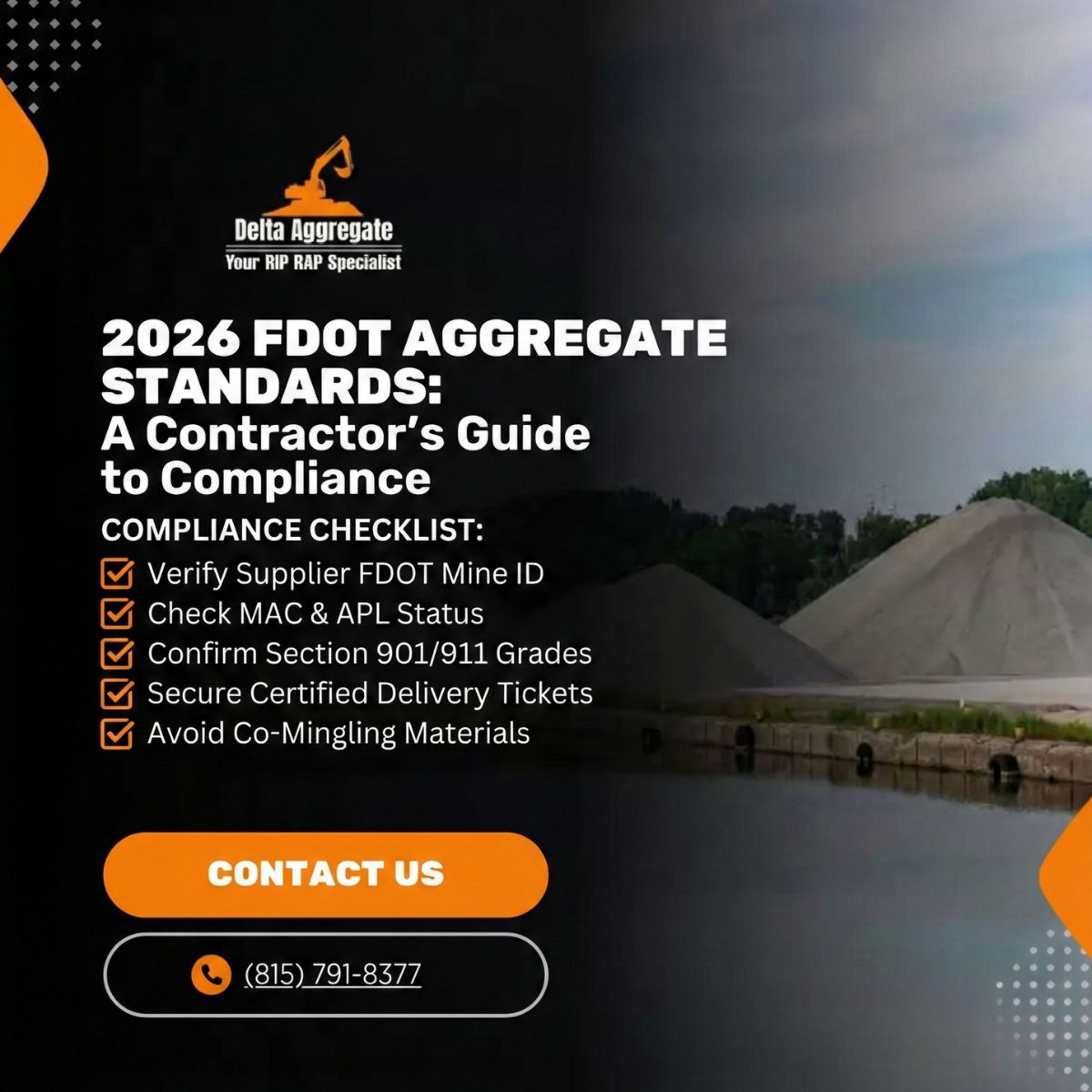
For contractors, staying compliant isn’t just about following rules; it’s about protecting your bond, your
reputation, and your bottom line. This guide breaks down the essential updates to the Florida Department of Transportation aggregate standards 2026 and how to ensure your supply chain remains bulletproof.
The Core Updates: Understanding Sections 901 and 911
The foundation of FDOT compliance lies in the Standard Specifications for Road and Bridge Construction. For 2026, the focus has shifted toward higher durability requirements for base materials and more stringent gradation for coarse aggregates.
Section 901: Coarse Aggregate
Section 901 governs the materials used in everything from structural concrete to asphalt. The 2026 revisions place a heavier emphasis on L.A. Abrasion limits and Soundness Loss.
- Key Change: There is a renewed focus on the “Flat and Elongated” particle count to ensure better compaction and structural integrity in flexible pavements.
- Why it matters: Using aggregate that fails these tests leads to premature road rutting and potential project rejection during the final inspection.
Section 911: Base and Stabilized Base Materials
This section covers the “bones” of the road. Whether you are using certified limestone Florida or recycled crushed concrete, Section 911 now requires more frequent “Limerock Bearing Ratio” (LBR) testing for high-traffic corridors.
The Power of “Source Approval” in 2026
You cannot simply buy rock from any quarry and expect it to pass FDOT inspection. In 2026, the Source Approval process is more digital and transparent than ever.
Source Approval is the formal recognition by the FDOT State Materials Office that a mine or terminal has an established Quality Control (QC) program. As a contractor, your first question to any vendor should be: “What is your FDOT Mine ID?”
How to Verify an FDOT-Approved Aggregate Supplier
Don’t take a salesperson’s word for it. Verification is your responsibility.
- Access the MAC System: The Materials Acceptance and Certification (MAC) system is the single source of truth. Check the FDOT Material/Producer Listing to ensure the source is currently “Accepted.”
- Check the “Approved Product List” (APL): For specialized items like Gulf Coast rip rap, ensure the specific size and grade are listed under the supplier’s credentials.
- Request the QC Plan: A reputable FDOT-approved aggregate supplier will have a dated, approved Quality Control Plan readily available for your project files.
Common Compliance Mistakes to Avoid
Even experienced contractors can run into trouble when logistics get complicated. Here are the red flags to watch for:
- Mixing Sources: Never co-mingle aggregates from an FDOT-approved source with a non-approved source on the same project site. This invalidates the certification for the entire stockpile.
- Expired Certifications: Source approval isn’t permanent. Sources can be suspended due to failed “Independent Assurance” (IA) tests. Always verify the status at the start of each project phase.
- Incorrect Size (Gradation): Ensure the delivery ticket matches the specific FDOT aggregate size (e.g., No. 57, No. 4, or No. 8) required by your contract.
Key Takeaway: Using non-certified materials in state-funded projects risks massive fines, mandatory removal of the material at your expense, and potential debarment from future FDOT contracts.
Steps to Guaranteed Compliance
| Step | Action | Responsibility |
| Step 1 | Verify Supplier Mine ID in the MAC System | Project Manager |
| Step 2 | Match Aggregate Grade to FDOT Section 901/911 Specs | Engineer of Record |
| Step 3 | Collect and File Delivery Tickets with Certification Tags | Site Supervisor |
| Step 4 | Perform On-site Testing (if required by contract) | Qualified Lab Tech |
In Summary
The 2026 standards are designed to build a more resilient Florida. By partnering with a supplier that understands the nuances of certified limestone in Florida and the logistics of Gulf Coast rip rap, you remove the guesswork from your compliance strategy.
For more technical details on material grades, visit our Florida Aggregate FAQ.
Need a quote for FDOT-certified materials for your next project?